



The Ferrari Luce and the Mercedes-AMG GT 4-Door Coupe EV are two very different takes on the electric performance car. Both are four-door EVs with huge power, advanced chassis systems and luxury cabins, but their focus is not the same.

AI Quick Summary
The Ferrari Luce and Mercedes-AMG GT 63 EV are distinct high-performance electric four-doors. The Luce focuses on a futuristic design, five-seat comfort, precise control from four motors, and more spacious dimensions. In contrast, the AMG GT 63 emphasizes higher peak power, quicker acceleration, superior range, and significantly faster charging, presented in a more aggressive, traditional performance saloon style.
This summary was generated by AI using this article’s content.
Read Next



The Ferrari Luce is Ferrari’s first fully electric car. It uses a dedicated EV platform, four electric motors, a 122kWh battery and five seats. It is built to offer Ferrari performance with more space and comfort than a traditional two-door supercar. Here is a detailed article on the Luce.
The Mercedes-AMG GT 4-Door Coupe EV is AMG’s new electric performance flagship. It is based on the AMG.EA platform and is offered in GT 55 and GT 63 versions. This comparison focuses on the GT 63, which is the more powerful model. Read more about the new AMG GT here.
Ferrari Luce Vs Mercedes-AMG GT 63 EV: Spec Comparison
| Specification | Ferrari Luce | Mercedes-AMG GT 63 4-Door EV |
| Platform | Dedicated Ferrari EV platform | AMG.EA platform |
| Body style | Four-door, five-seat EV | Four-door electric coupe |
| Motor layout | 4 motors, one per wheel | 3 motors, two rear and one front |
| Motor type | Radial-flux permanent magnet synchronous | Axial flux |
| Drive system | Electric AWD | AMG Performance 4MATIC+ AWD |
| Maximum power | 772kW / 1,050cv / approx. 1,036hp | 860kW / 1,169hp |
| Continuous output | Not stated | 530kW / 721hp |
| Maximum torque | 990Nm at motors / 11,500Nm at wheels | 2,000Nm |
| Battery capacity | 122kWh gross | 106kWh net |
| Electrical system | 800V | 800V |
| Maximum DC charging | 350kW | 600kW |
| AC charging | Not stated | 11kW |
| 10-80% DC charging | Not stated | 11 minutes |
| Claimed range | Over 530km | 596-696km WLTP |
| 0-100km/h | 2.5 seconds | 2.4 seconds |
| 0-100km/h with rollout | Not stated | 2.1 seconds |
| 0-200km/h | 6.8 seconds | 6.8 seconds |
| 0-200km/h with rollout | Not stated | 6.4 seconds |
| Top speed | 310km/h | 300km/h with Driver’s Package |
| Kerb weight | 2,260kg | 2,460kg |
| Length | 5,026mm | 5,094mm |
| Width | 1,999mm | 1,959mm |
| Height | 1,544mm | 1,411mm |
| Wheelbase | 2,961mm | 3,040mm |
| Boot space | 597 litres | 507 litres |
| Frunk | Not stated | 62 litres |
| Drag coefficient | Not stated | 0.22Cd |
| Wheels | 23-inch front, 24-inch rear | 19- to 21-inch |
| Rear-wheel steering | Yes | Yes, up to 6 degrees |
| Suspension | Active suspension | AMG ACTIVE RIDE CONTROL air suspension |
| Brakes | CCM brakes, 390mm front / 372mm rear | Carbon-ceramic front, steel rear |
EV Powertrain
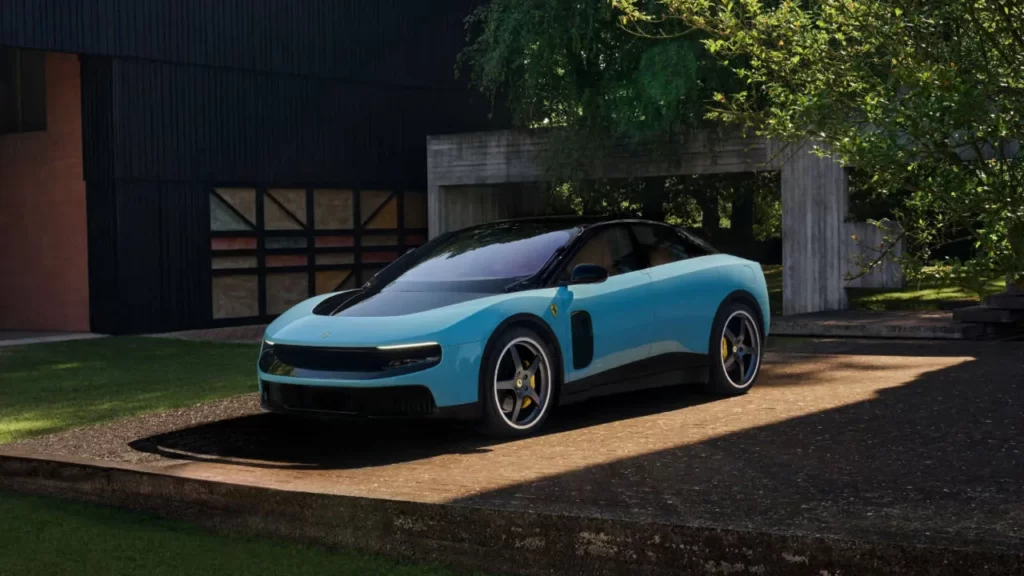
The Ferrari Luce uses four electric motors, with one motor for each wheel. This gives Ferrari very precise control over traction, torque vectoring and regeneration. The front axle produces 210kW, while the rear axle produces 620kW. Combined output is 1036hp.
Ferrari’s motors rev very high for an EV. The front motors can reach 30,000rpm, while the rear motors can reach 25,500rpm. The car produces 990Nm at the motors and 11,500Nm at the wheels.
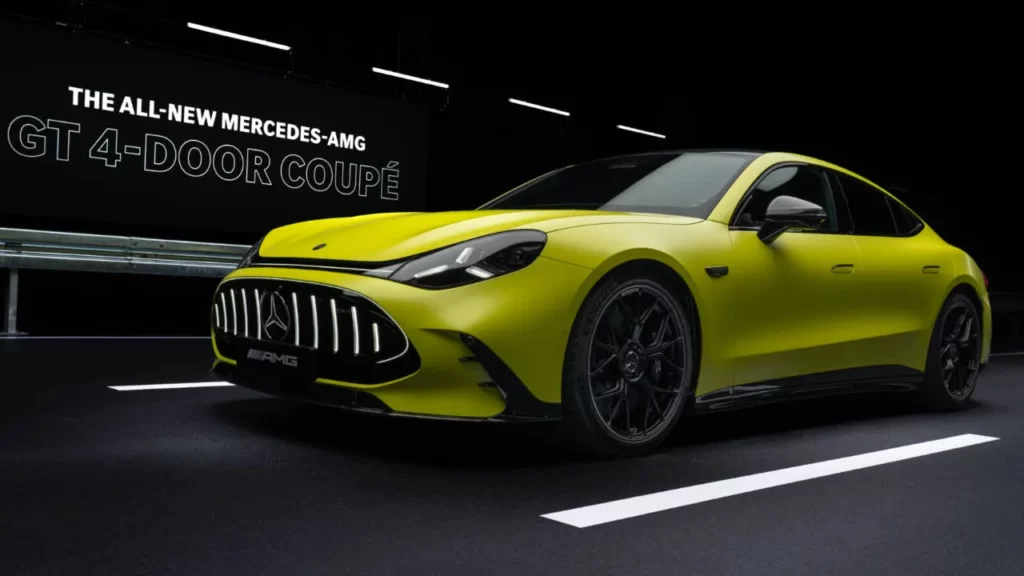
The AMG GT 63 uses three axial flux motors. There are two motors at the rear and one at the front. Total output is higher than the Ferrari at 1,169hp, with 2,000Nm of torque. AMG also states a continuous output of 530kW, or 721hp, which shows its focus on repeatable performance.
Both cars use 800V electrical systems. The Ferrari has the larger battery at 122kWh gross, while the AMG has a 106kWh net battery. However, the AMG’s battery uses 2,660 directly cooled cylindrical cells and is built for very high charging and discharge performance.
Performance
- 0-100km/h: AMG GT 63 is quicker at 2.4 seconds.
- Ferrari Luce 0-100km/h: 2.5 seconds.
- AMG 0-100km/h with 1-foot rollout: 2.1 seconds.
- 0-200km/h: Both cars take 6.8 seconds in standard timing.
- AMG 0-200km/h with rollout: 6.4 seconds.
- Top speed: Ferrari Luce is faster at 310km/h.
- AMG top speed: 300km/h with the Driver’s Package.
Range & Charging
This is where the AMG has a clear lead. The Mercedes-AMG GT 63 supports up to 600kW DC fast charging. It can charge from 10 to 80 per cent in around 11 minutes, where suitable chargers are available. AMG also claims it can add about 460km of WLTP range in 10 minutes.
The Ferrari Luce supports up to 350kW DC fast charging. Ferrari has not stated a 10 to 80 per cent charging time in the provided data. Range also favours the AMG. It offers a claimed WLTP range of up to 696KM. The Ferrari claims more than 530km.
Exterior Design
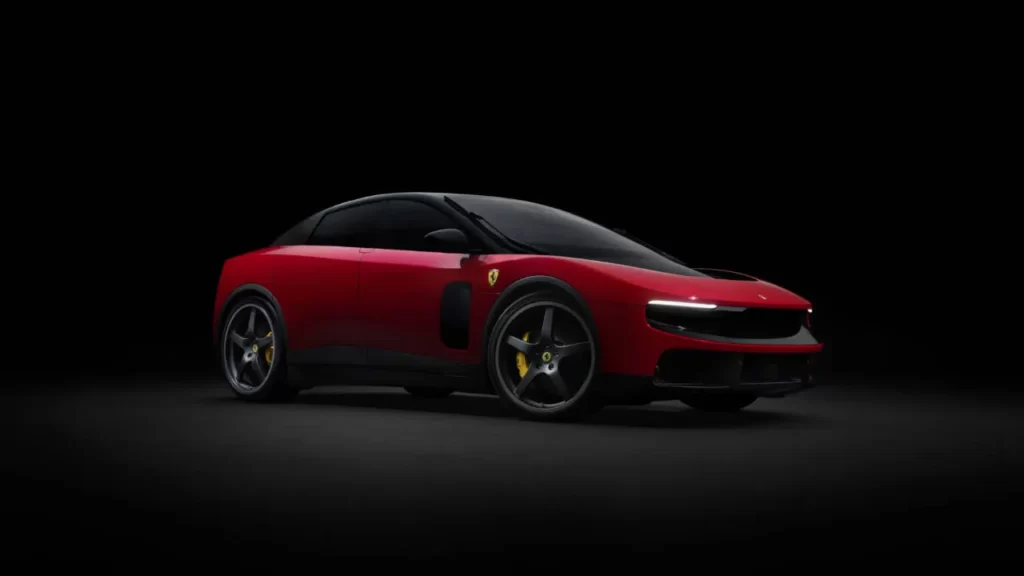
The Ferrari Luce has a cleaner and more futuristic design. Its glasshouse has a smooth shell-like form, while floating front and rear aerodynamic wings help shape airflow. The transparent light panels are built into the main body surfaces, and the halo-style rear lights reference older Ferrari models such as the 360 Modena and 458 Italia.
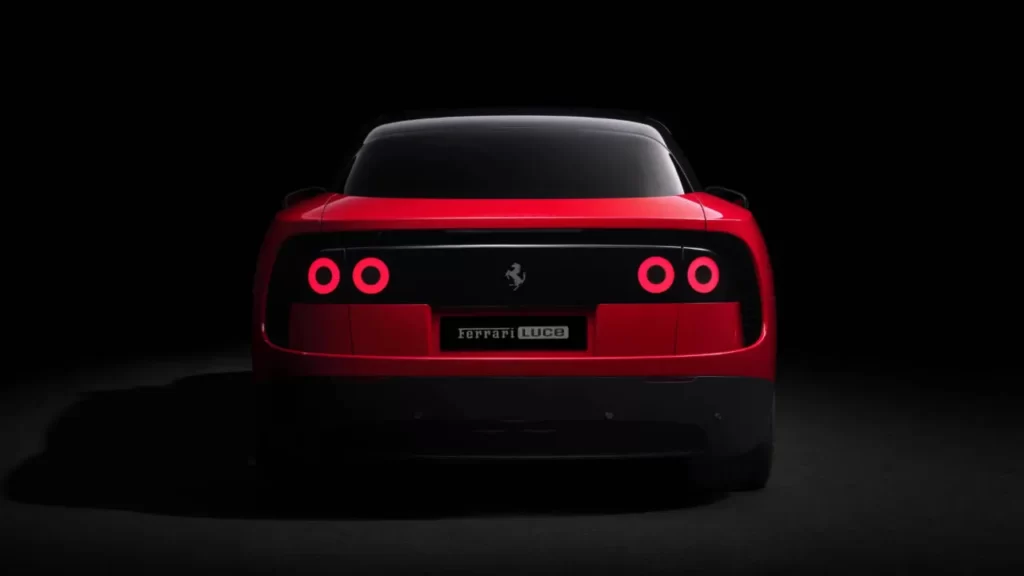
Its wheel setup is also extreme. The Luce uses 23-inch front wheels and 24-inch rear wheels, the largest staggered wheel diameters on a series-production Ferrari road car.
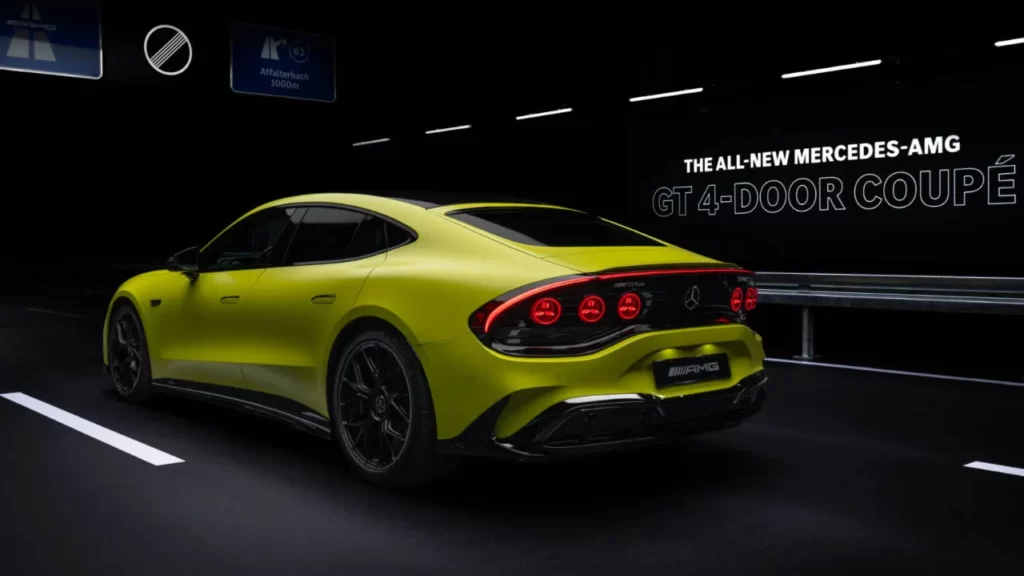
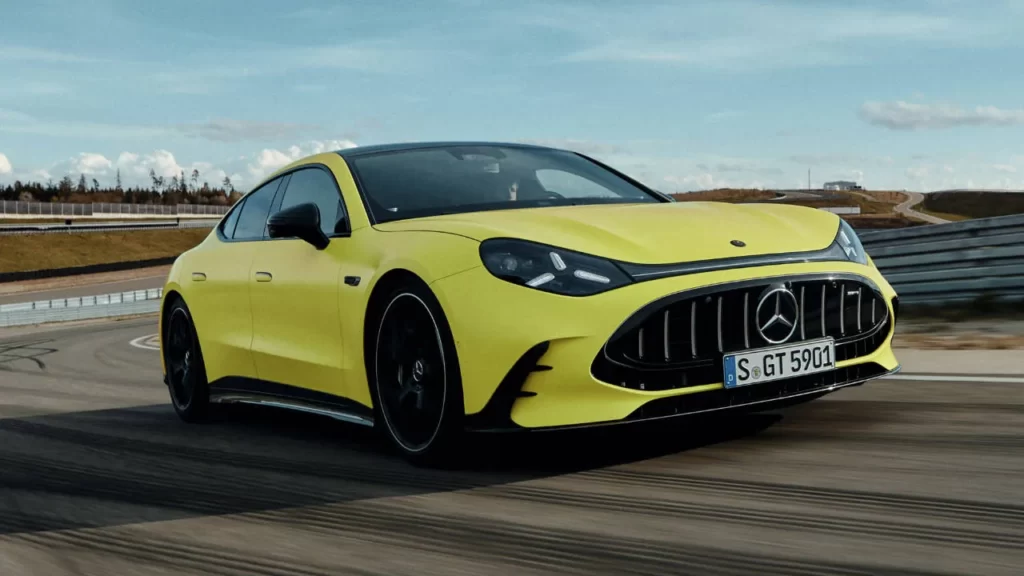
The AMG has a more aggressive performance-saloon look. It is longer and lower than the Ferrari, with a long bonnet, fastback roofline, flared arches and wide rear shoulders. It also has active aero elements, including underbody venturi plates, an active rear diffuser, an active rear spoiler and front air panels.
Dimensions
- The AMG is longer, lower and has a longer wheelbase. It measures 5,094mm long, 1,959mm wide and 1,411mm tall, with a 3,040mm wheelbase.
- The Ferrari is shorter but wider and taller. It measures 5,026mm long, 1,999mm wide and 1,544mm tall, with a 2,961mm wheelbase.
- The Ferrari also has more rear boot space at 597 litres. The AMG has 507 litres at the rear, but adds a 62-litre frunk.
Interior Features
The Ferrari Luce cabin focuses on tactile luxury. It combines physical buttons, dials, toggles and switches with OLED displays. Screen sizes include 12.9-inch, 12-inch, 10.1-inch and 6.3-inch panels. Materials include recycled anodised aluminium, Gorilla Glass, premium leather and Alcantara.
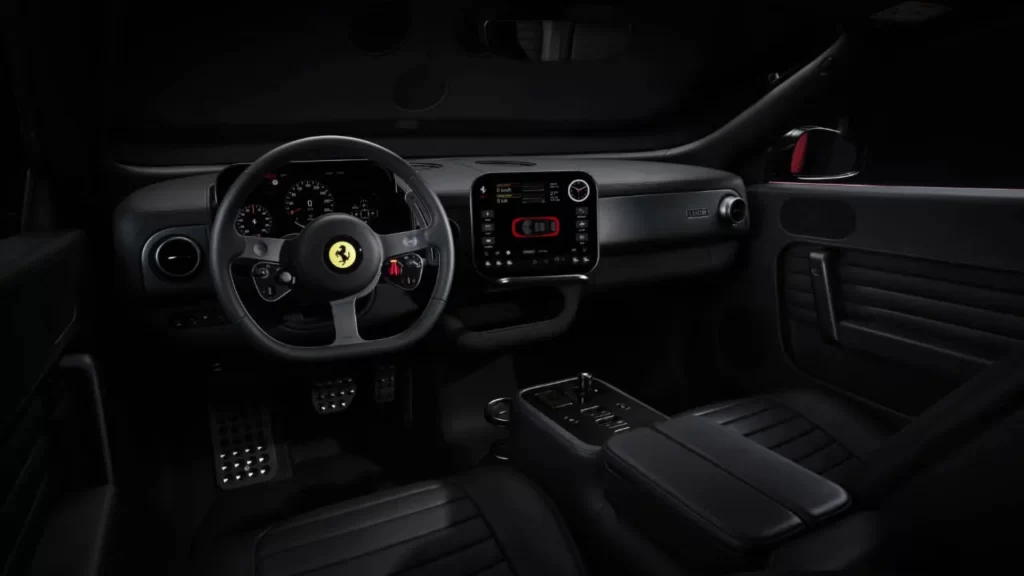
Ferrari also gives the Luce a 21-speaker audio system with 24-channel, 3,000W amplification. Other highlights include an E Ink key, e-Manettino, traditional Manettino, torque-control paddles and physical climate controls.
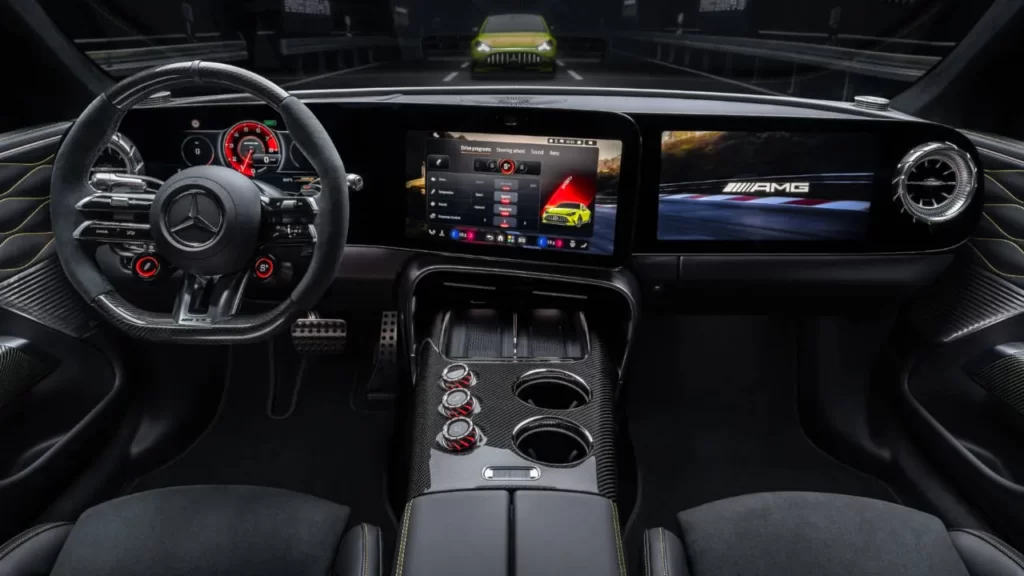
The AMG cabin is more digital and performance-led. It uses a 10.2-inch driver display and a 14.0-inch central display. A 14.0-inch passenger screen is also available. It also gets AMG Race Engineer rotary controls, AMG Performance steering wheel, haptic controls, optional AMG Performance seats and the SKY CONTROL panoramic glass roof.
Tech & Drive Modes
The Ferrari’s key technology is built around driving feel. Its Vehicle Control Unit updates targets 200 times per second and manages the powertrain, energy recovery and chassis systems. The Luce also gets Side Slip Control X, Torque Shift Engagement, Smart Overbrake, extended regenerative braking up to 0.5g and EV route planning through Google Maps and Apple Maps.
The torque-control paddles are a major feature. The right paddle adjusts available torque, while the left paddle adjusts energy recovery and deceleration. Ferrari says this does not simulate gears, but gives the driver a new EV torque language.
The AMG has more software depth. It uses MB.OS and MBUX, with AI support from ChatGPT, Microsoft Bing and Google Gemini. It also gets AMG Performance Menu, AMG Set-Up, AMG Track Pace, Predictive Performance Manager, live Energy Flow display, Aero Flow display and a Sound Slider.
The AMG also has seven AMG Dynamic Select modes: Comfort, Sport, AMGFORCE Sport+, Race, Slippery, Eco and Individual.
Chassis, Suspension & Brakes
The Ferrari Luce has active suspension derived from the Ferrari F80, semi-virtual double wishbone front suspension and independent rear-wheel steering. Its four-motor layout also allows torque vectoring at each wheel.
Ferrari says the Luce has a centre of gravity 95mm lower than the Purosangue and a yaw moment of inertia 15 per cent lower. Its body and battery structure also improve bending rigidity by 25 per cent and torsional rigidity by 35 per cent compared with previous four-door applications.
The AMG uses AMG ACTIVE RIDE CONTROL air suspension with semi-active roll stabilisation. It has triple-adjustable air springs, an 8.2-litre pressure reservoir, speed-dependent ride-height control and multi-link axles at the front and rear. Rear-axle steering can turn up to 6 degrees.
For braking, the Ferrari uses Carbon-Ceramic brakes with 390mm front and 372mm rear discs. Its regenerative braking can recover up to 0.5g. AMG uses carbon-ceramic front brakes and steel rear brakes, with a system that blends regenerative and hydraulic braking.
Ferrari Luce Vs Mercedes-AMG GT 4-Door Coupe EV Verdict
The Ferrari Luce is the more emotional and exclusive choice. It has four motors, a larger 122kWh battery, lower kerb weight, higher 310km/h top speed, a more distinctive cabin and stronger design drama. It is also more important as a brand milestone because it is Ferrari’s first EV.
The Mercedes-AMG GT 63 4-Door Coupe EV is the stronger all-round electric GT on paper. It has more power at 1,169hp, more torque at 2,000Nm, faster charging at up to 600kW, a longer claimed WLTP range and deeper software features.
Stay tuned to UAE’s most popular auto blog for more information about the latest happenings in all of the Emirates.
The Ferrari Luce and the Mercedes-AMG GT 4-Door Coupe EV are two very different takes on the electric performance car. Both are four-door EVs with huge power, advanced chassis systems and luxury cabins, but their focus is not the same.
