



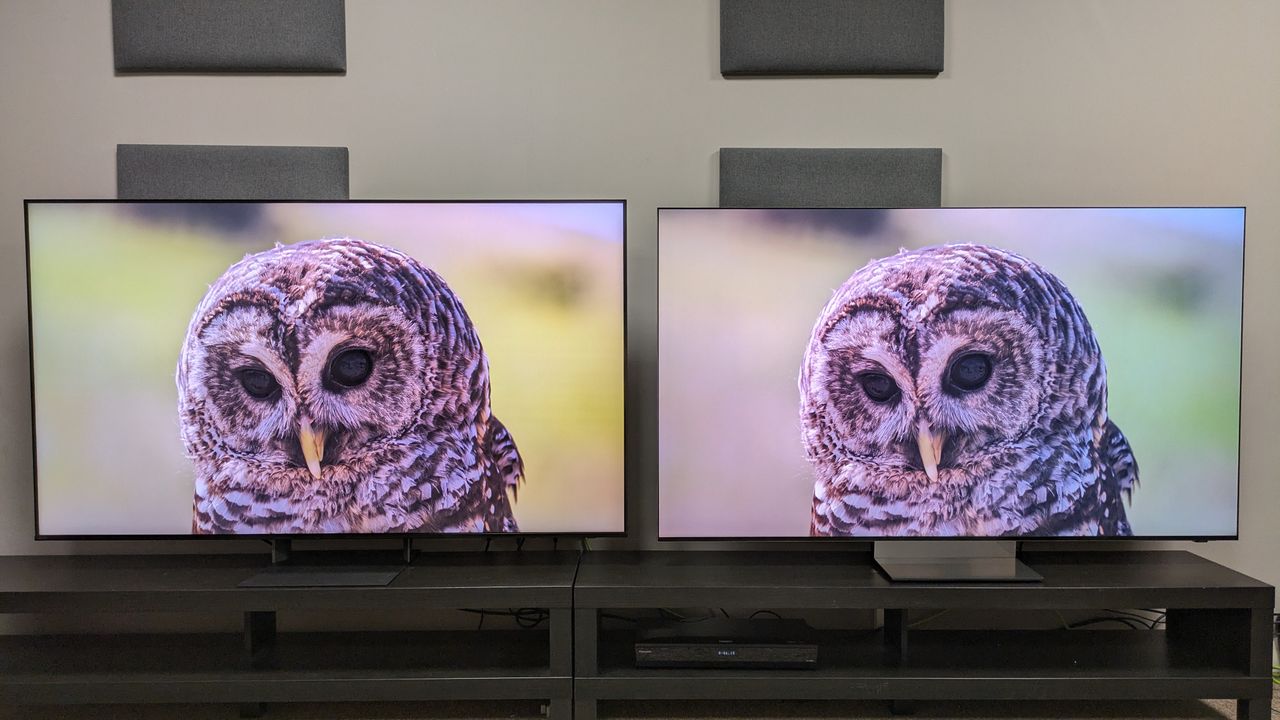
RGB TVs have become the talk of the TV world this year, with just about every brand releasing their own RGB model. While the tech is still in its infancy, having been introduced by Hisense in 2025, the tech is being touted as an OLED-killer, delivering much higher brightness and bolder colors akin to a mini-LED, while also delivering the contrast and black tones of an OLED.
So far, I’ve tested the Hisense UR8 RGB mini-LED side-by-side with the Samsung QN80H (a traditional mini-LED), where the UR8’s color didn’t wow me, but its contrast and backlight control did. I’ve also tested the Sony Bravia 7 II RGB mini-LED side-by-side with one of 2026’s best TVs, the LG C6 OLED, and while the C6 came out on top, the Bravia 7 II showed real potential for RGB tech.
But, how do two RGB TVs compare? I’ve swapped out the 55-inch Bravia 7 II for a 65-inch Bravia 7 II and, thanks to some fortunate timing, the flagship Samsung R95H Micro RGB TV has landed in our testing lab at the same time. For context, a 65-inch Bravia 7 II costs roughly $2,599 / £1,999 / AU$3,995, while a 65-inch R95H costs $2,999 / £3,099 / AU$5,295. So, while prices are relatively close in the US (when you’re spending this much money), they are in different price brackets in the UK and Australia.
One note here: as the Samsung R95H has a matte screen, this can cause a red tint in photos that’s not visible in-person.
Colors
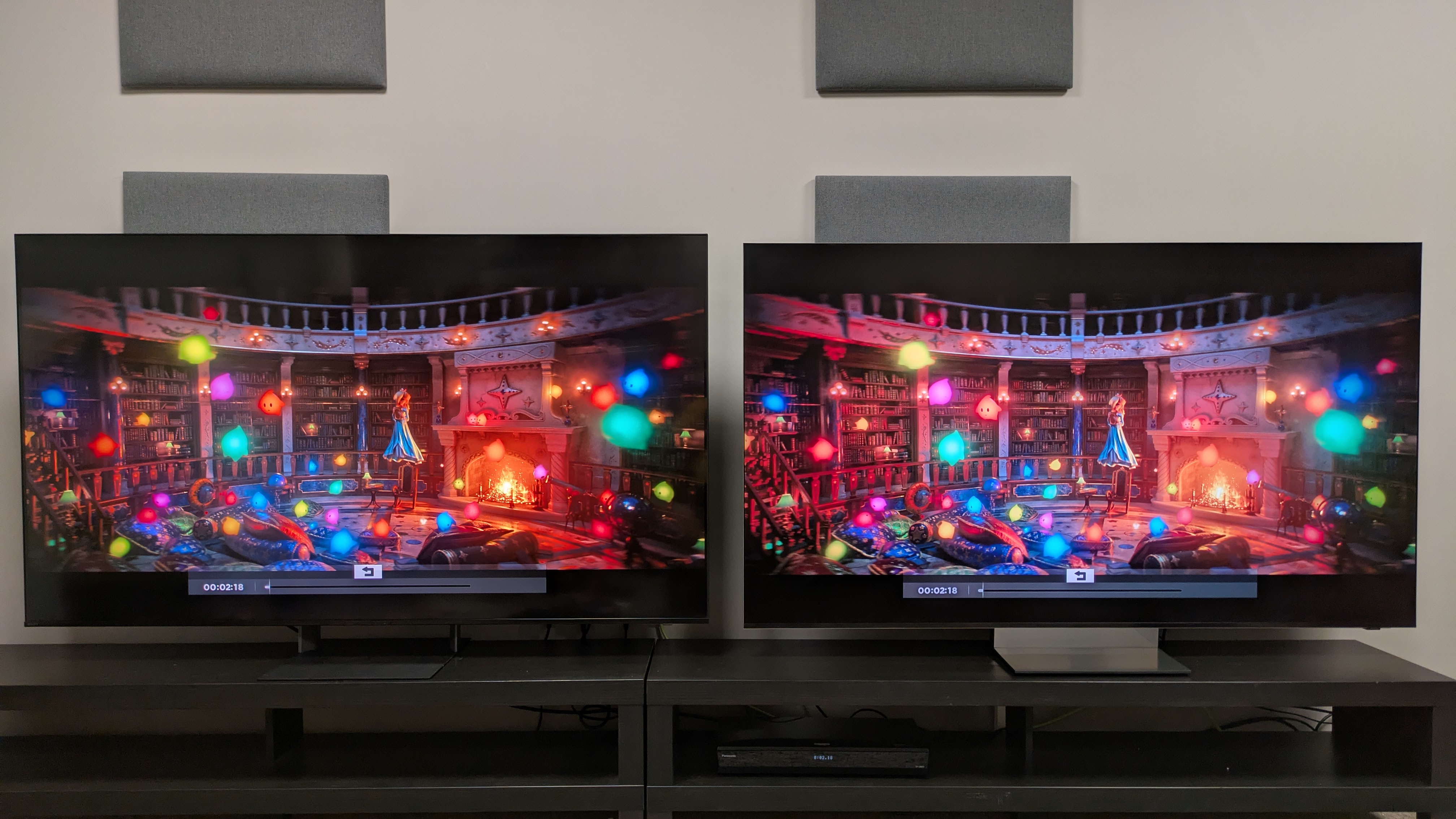
Watching The Super Mario Galaxy Movie, with both TVs in their Movie modes (Movie for the R95H, Cinema for the Bravia 7 II), I noticed that in their default settings, the R95H appeared to be overblowing its brightness, resulting in some clipping of bright objects. I found that dropping the R95H’s brightness from its default 50 (max) down to 45 or 40 was better for the picture. The color luminance was certainly impressive on the R95H though, with the Lumas’ colors looking extremely bright and vibrant on screen. The Bravia 7 II’s colors had more depth and richness to them, having a lot more boldness that reminded me of an OLED.
Both TVs’ color accuracy for the red and green of Mario and Luigi’s overalls respectively, and the vivid pink of Peach’s dress, were very good, but there’s no denying the R95H has much more pop on screen. The R95H’s colors can look a little washed out next to the Bravia 7 II at times, as the latter has such richness in its color profile. While the R95H delivered the brightness of the animation, it was hard to ignore how rich and deep the Bravia 7 II’s colors were.
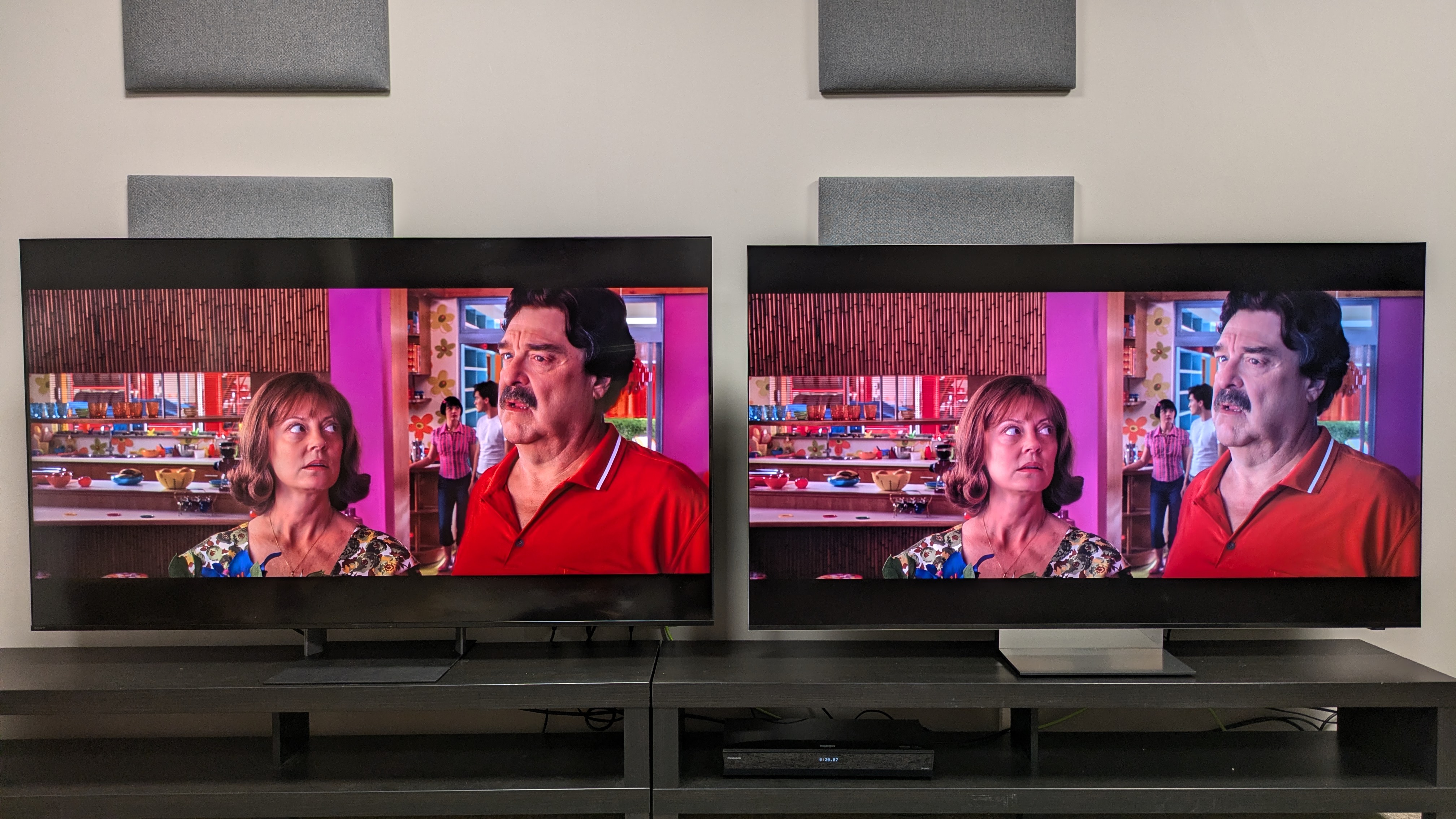
Moving to Speed Racer, a real-world movie with equally cartoon-ish vibrant colors, the Bravia 7 II once again showcased richer, deeper colors, giving more detail to the gaudy outfits and decor of the 1960s-inspired aesthetic. The R95H once again delivered on the brightness, which really did make colors explode on screen.
On the surface, the R95H seemed to sacrifice some color accuracy in favor of the pop on screen and in some cases this worked. The orange walls and floors of the Racer home and Pops Racer’s shirt were much more vivid on the R95H, but had that nice clarity on the Bravia 7 II. Yellow however, such as Mom Racer’s apron, was much bolder on the Bravia 7 II.
Switching between picture modes, the Bravia 7 II’s Cinema and Professional (its equivalent Filmmaker Mode) were consistent in their color depth and volume, but Cinema mode suited the more colorful movies. On the R95H, while Filmmaker Mode had a nice accuracy to it, the colors were a bit lifeless in comparison to Movie mode. While the R95H’s Movie mode did sometimes sacrifice accuracy, its sheer brightness was better for Speed Racer.
Contrast and backlight
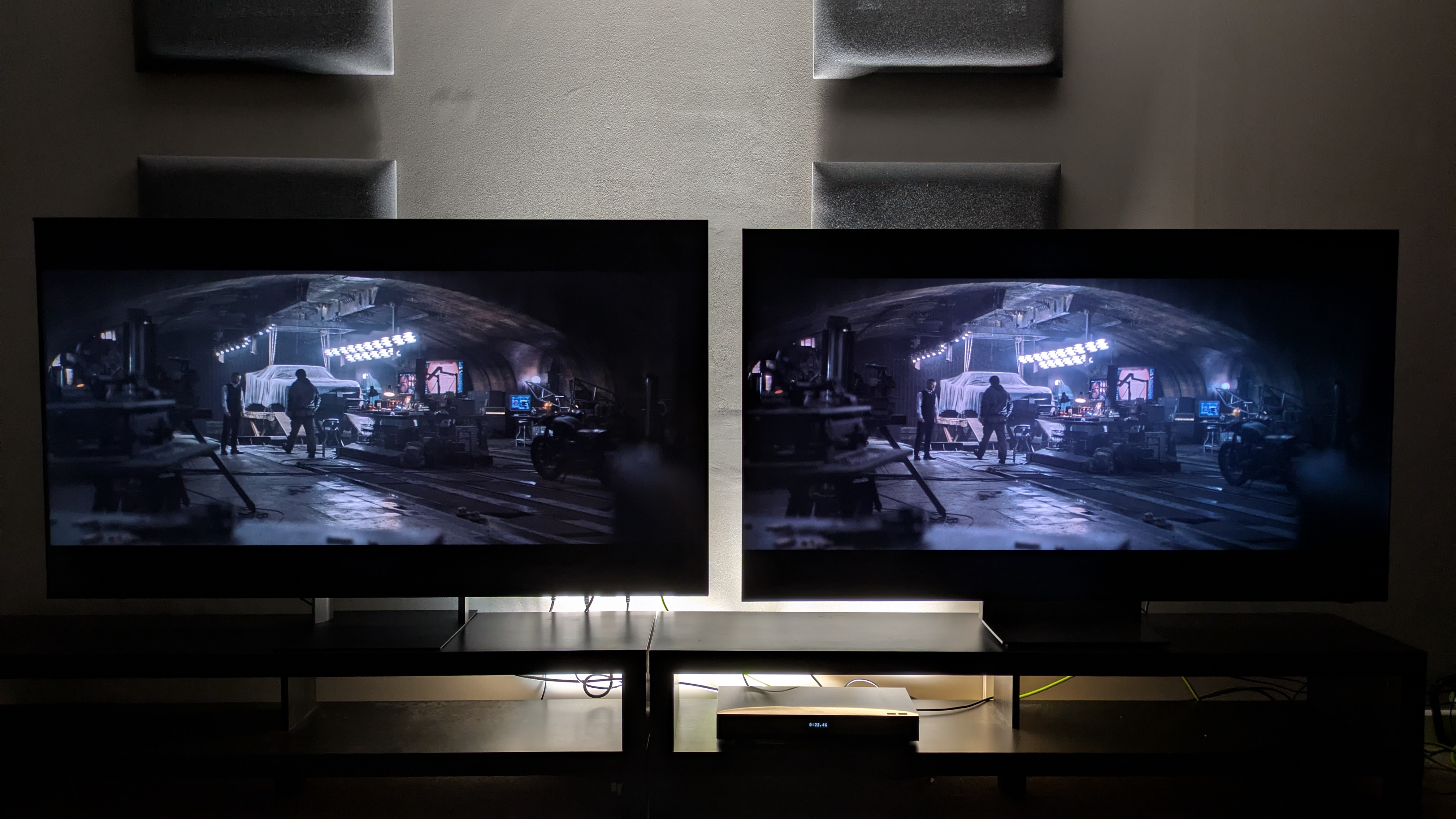
Firing up the opening scenes of The Batman, an often challenging disc for backlit TVs, with both models set to their more accurate Filmmaker modes (Professional for the Bravia 7 II), they do an excellent job. Contrast was strong on both TVs, with a great balance between light and dark tones, such as wall lamps and dark wood walls in Mayor Mitchell’s house, or the overhead lights with the black walls of the Batcave. In the default settings, the R95H again demonstrates its higher brightness, which results in stronger perceived contrast compared to the Bravia 7 II.
Dark tones were pleasingly rich on both TVs as well, and there was very little sign of blooming when viewed head-on. From an angle however, both TVs did show some signs of blooming during dark scenes, with the R95H’s more obvious than the Bravia 7 II’s. The Bravia 7 II did sometimes show some black crush, resulting in detail loss in objects, while the R95H did a better job maintaining these details, such as the texture in Batman’s armor and the lapel of Gordon’s coat.
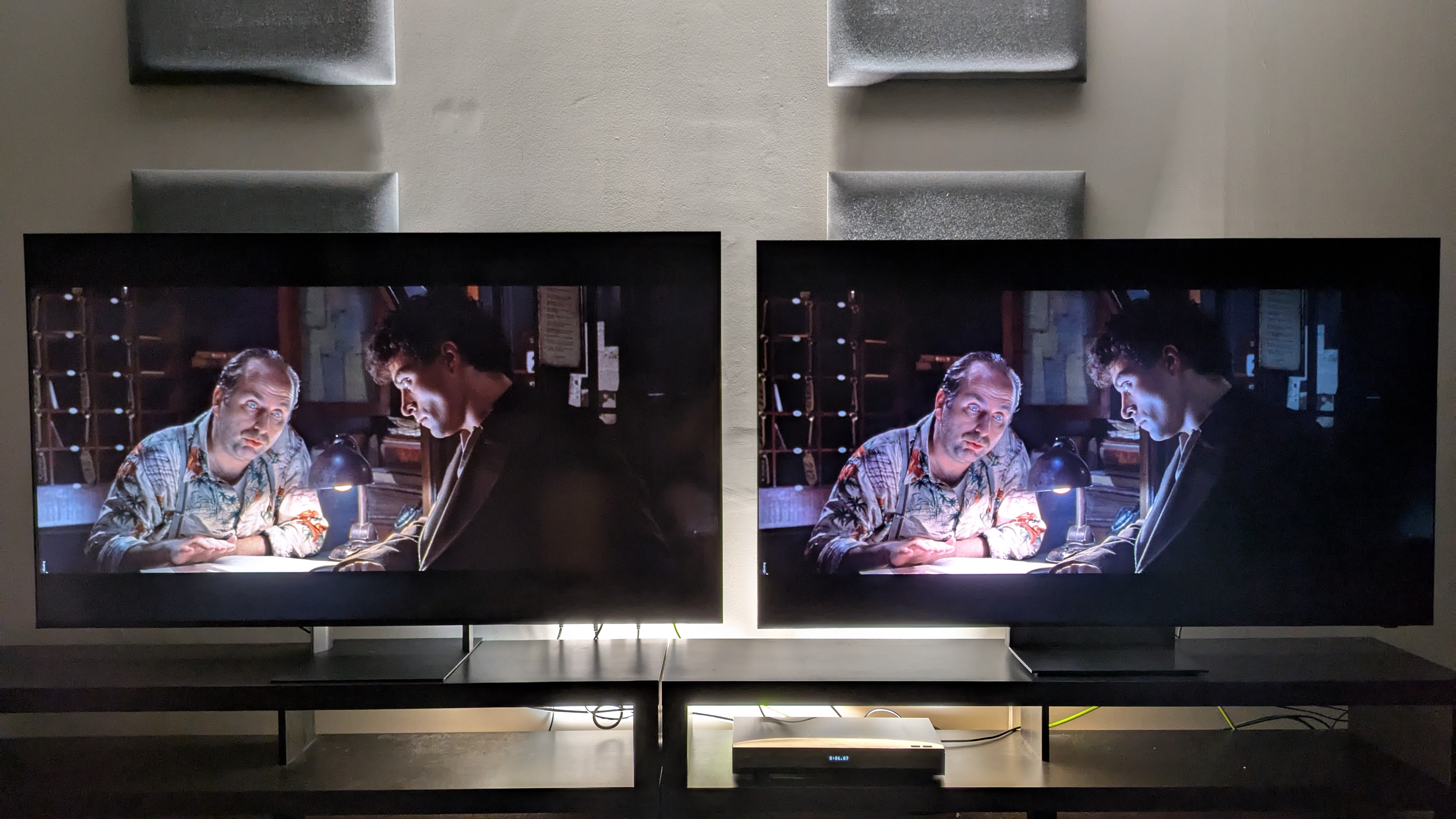
Both TVs did a great job with shadows, but during The Batman, the Bravia 7 II cast deeper, inkier shadows across people’s faces. Switching to Dark City, which features plenty of these high contrast shadow shots, this was actually reversed. The R95H cast darker shadows that delivered a higher perceived contrast compared to the Bravia 7 II.
Black levels looked great in Dark City on both sets, although interestingly, in a shot where Murdoch talks to the hotel clerk, I noticed the R95H was subject to black crush this time and the Bravia 7 II actually had better shadow detail. Some dark scenes in the movie did reveal some more blooming, moreso on the R95H when viewed from an angle.
Trying out some black and white content, the R95H’s higher brightness creates a greater dynamic range and higher contrast in black and white movies. Watching Dead Man, any scene during the day has much more punch on the R95H, thanks to the aforementioned brighter whites. Both TVs do demonstrate deep dark tones though, with a good range of grays in between. The 4K disc is in SDR and when switching from Filmmaker to Movie, the Bravia 7 II has a significant brightness upgrade over the R95H, though the R95H’s brightness is much lower by default in this mode.
Brightness
Starting off with measurements, the R95H is significantly brighter with both TVs set to HDR Movie mode. The R95H clocked in at 1,960 nits HDR peak brightness, while the Bravia 7 II hit 1,163 nits. It’s a similar story in Filmmaker/Professional mode, as the R95H hits 1,977 peak HDR brightness and the Bravia 7 II hits 1,114 nits.
Fullscreen HDR brightness, however, is where things get interesting. In Movie/Cinema mode, the R95H clocks in at 607 nits, while the Bravia 7 II measures 830 nits. This means the Sony should display larger bright areas on screen with more punch and vibrancy.
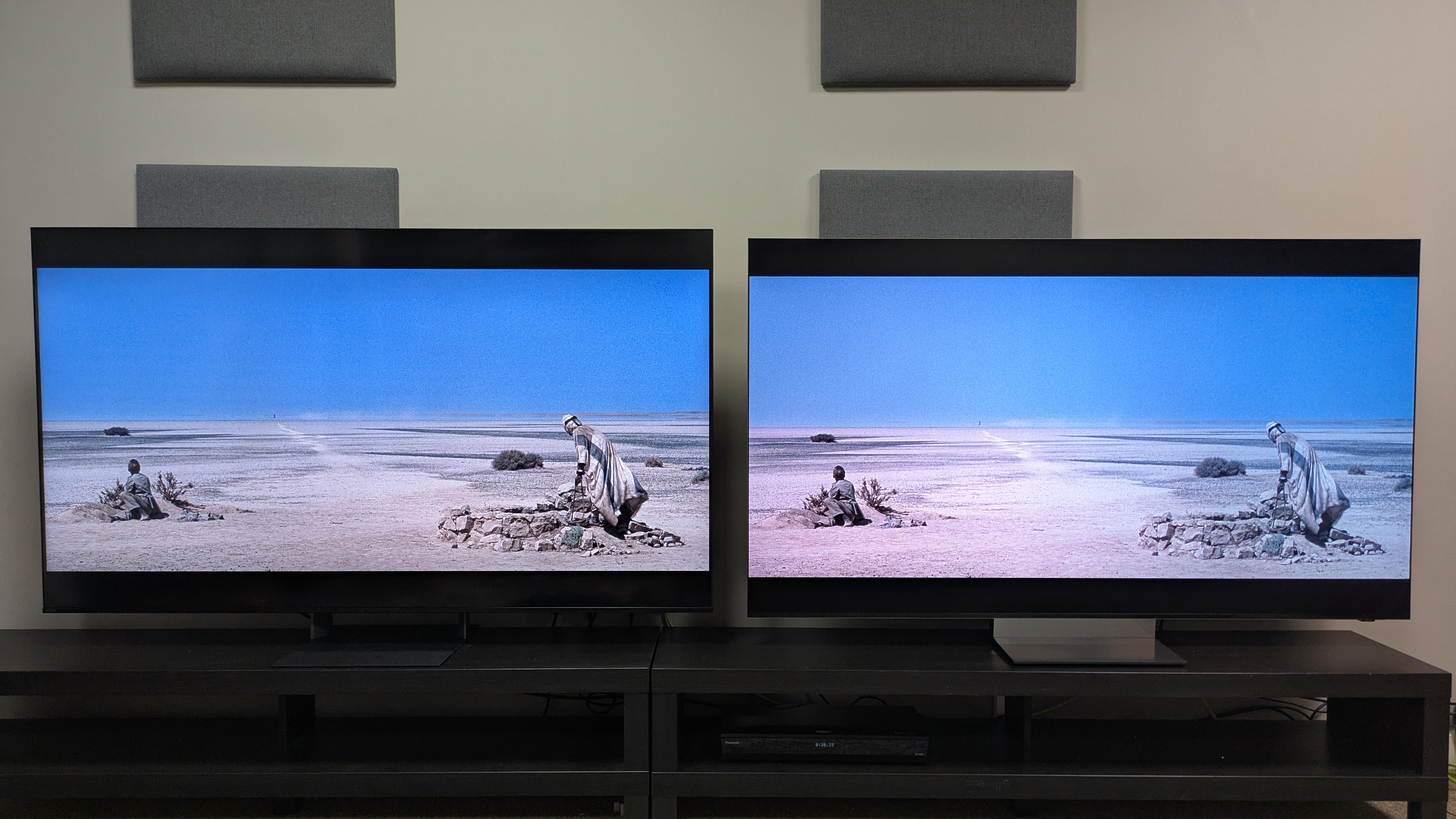
Watching real-world content, the R95H demonstrates much higher brightness than the Bravia 7 II, especially in Movie mode and with HDR content on screen. Watching Lawrence of Arabia, specifically the desert scene where Lawrence and his guide fetch water from a well, the R95H demonstrates significantly higher perceived brightness, with the white sands and blue sky looking much more vibrant on the R95H. While the Bravia 7 II shows more detail in brighter areas, such as the patterns in the ground, the R95H clearly wins in the brightness battle here. This is interesting given that the Bravia 7 II had the higher HDR fullscreen brightness.
The same is true with more colorful movies. Going back to Speed Racer, the R95H shows much punchier highlights, such as the lights of the Mach 5, as well as glossier whites of the Mach 5 and Speed’s helmet. I did find that switching to each TV’s respective Filmmaker Mode resulted in much closer brightness, though the R95H’s peak areas were still a little brighter.
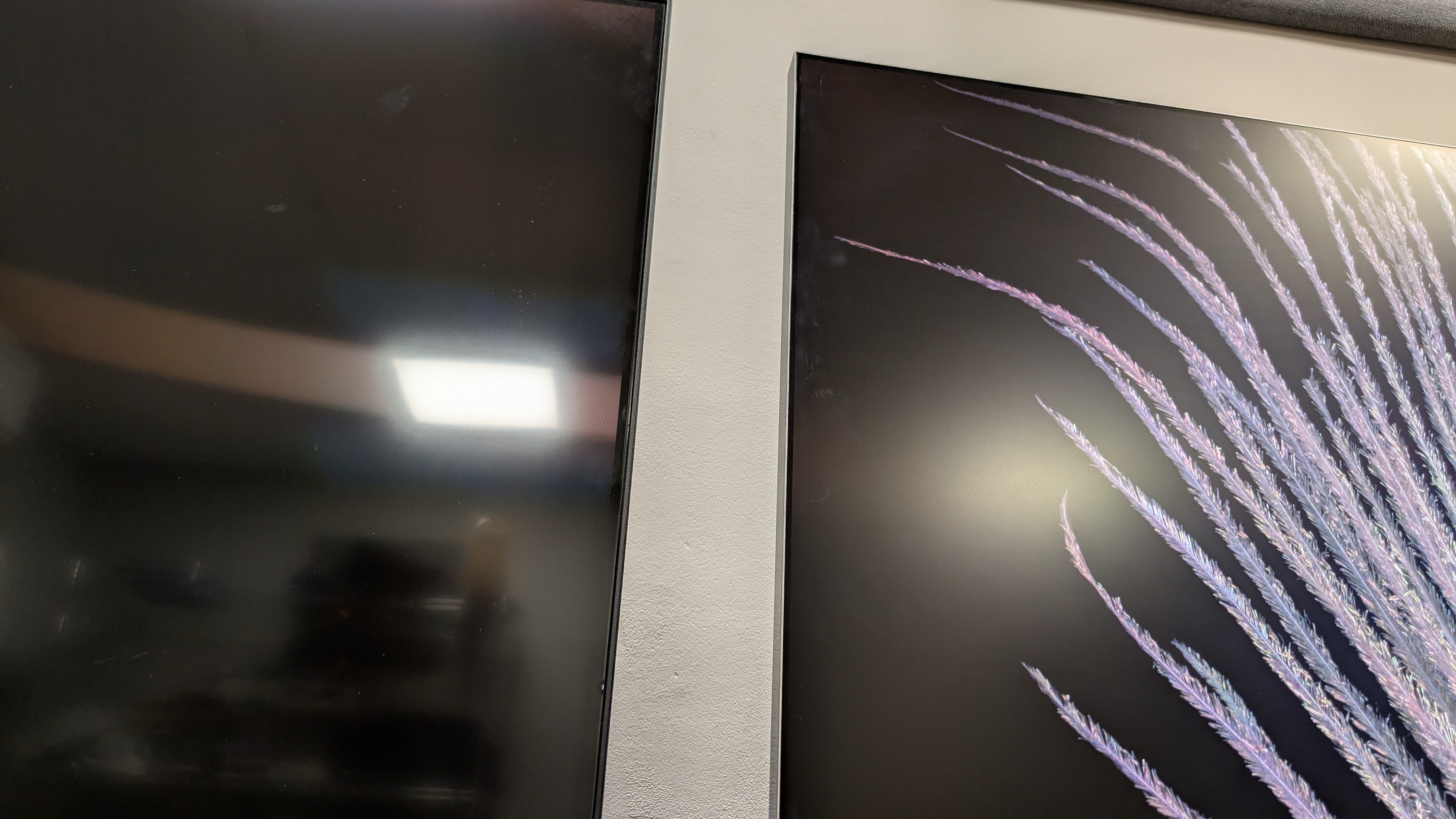
As for bright room viewing, the R95H shows how effective its anti-glare, matte screen is. Even with darker movies such as The Batman, there’s no sign of mirror-like reflections at any point. For the Bravia 7 II, bright room viewing is more of a challenge. With a brighter scene, such as the desert one from Lawrence of Arabia, the Bravia 7 II does a good job in a bright room. Any darker or high-contrast scenes, and mirror-like reflections are clearer.
The best buy
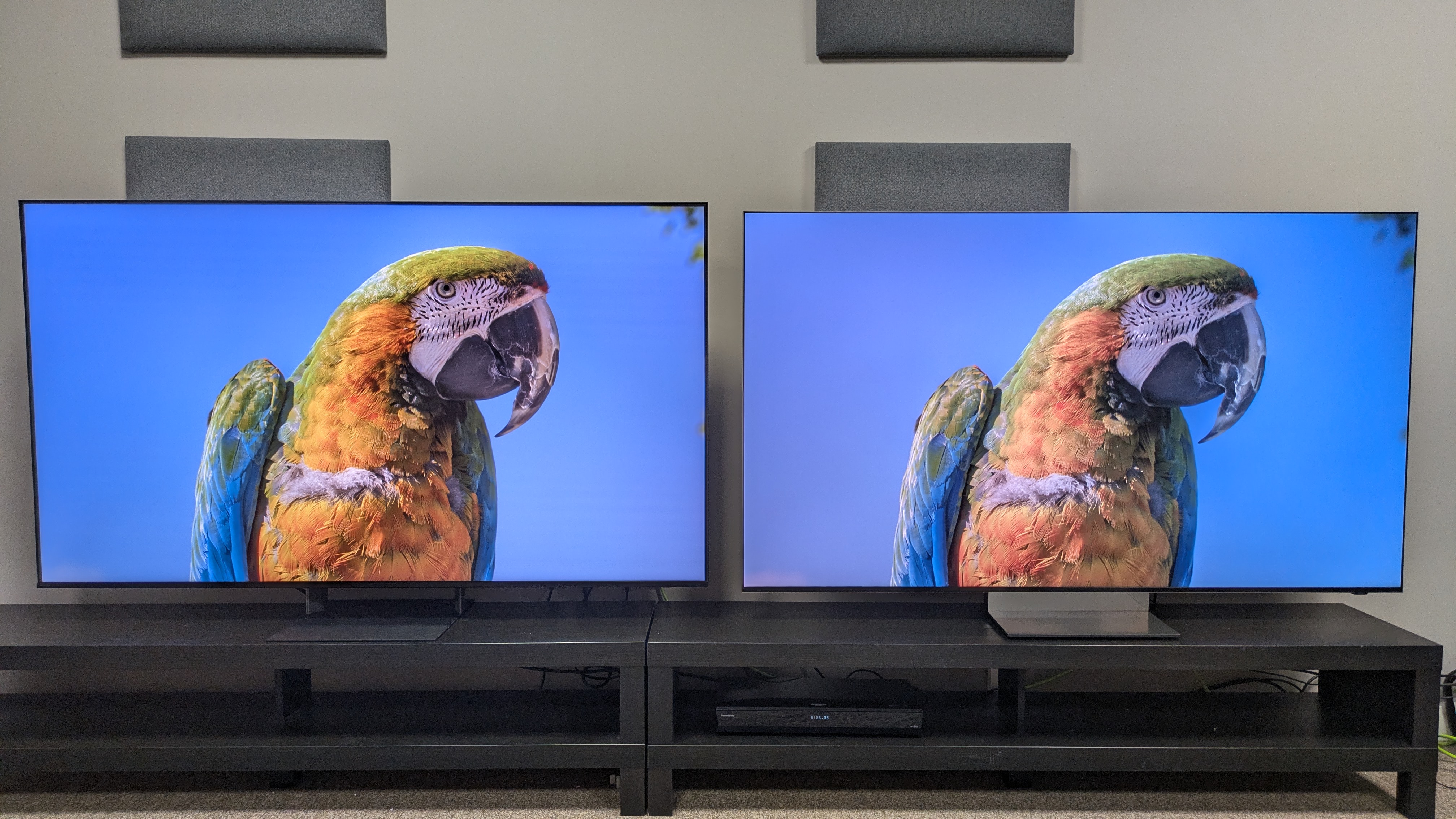
Which TV you should buy from these two really comes down to what region you’re in and your budget. In the US, it’s a close contest, whereas in the UK and Australia, the Bravia 7 II is much cheaper. In terms of actual performance, both TVs did well. Both TVs rendered challenging dark scenes accurately, with hints of blooming on both (though they were sometimes more obvious on the R95H). Both TVs showed excellent color reproduction, with the R95H showing higher color luminance, where the Bravia 7 II showed more color volume.
It’s difficult to choose between these two TVs, and while I preferred the Bravia 7 II in some reference scenes, especially with color, the R95H performed better in darker, more contrast-y scenes. While this is a battle of a mid-range RGB (Bravia 7 II) vs a flagship RGB (R95H), the Bravia 7 II puts up a heck of a fight and is the better value option for the budget conscious. If however money isn’t an issue, the R95H is the TV to pick.
Do either of these TVs topple OLED? For my money, not quite yet, but the Bravia 7 II delivers some seriously impressive colors and the R95H shows again what RGB tech can do for backlight control. OLED, it’s definitely time for it to start taking note.

