



Writing about chipsets can be a bit like watching paint dry. These tiny mobile brains get more powerful every year, but 99% of smartphone users don’t get anywhere close to using their full potential. The Snapdragon 8 Gen 3, for instance, came out in 2023, but most people would be hard-pressed to notice a performance difference between that chipset and Qualcomm’s latest, the Snapdragon 8 Elite Gen 5, which powers most of today’s best Android phones.
It’s a classic case of diminishing returns — semiconductor manufacturers can keep raising the chipset performance ceiling, but if phones can’t make use of all that extra power (and for several years, they haven’t been able to), the tangible gains are small at best, and non-existent at worst.
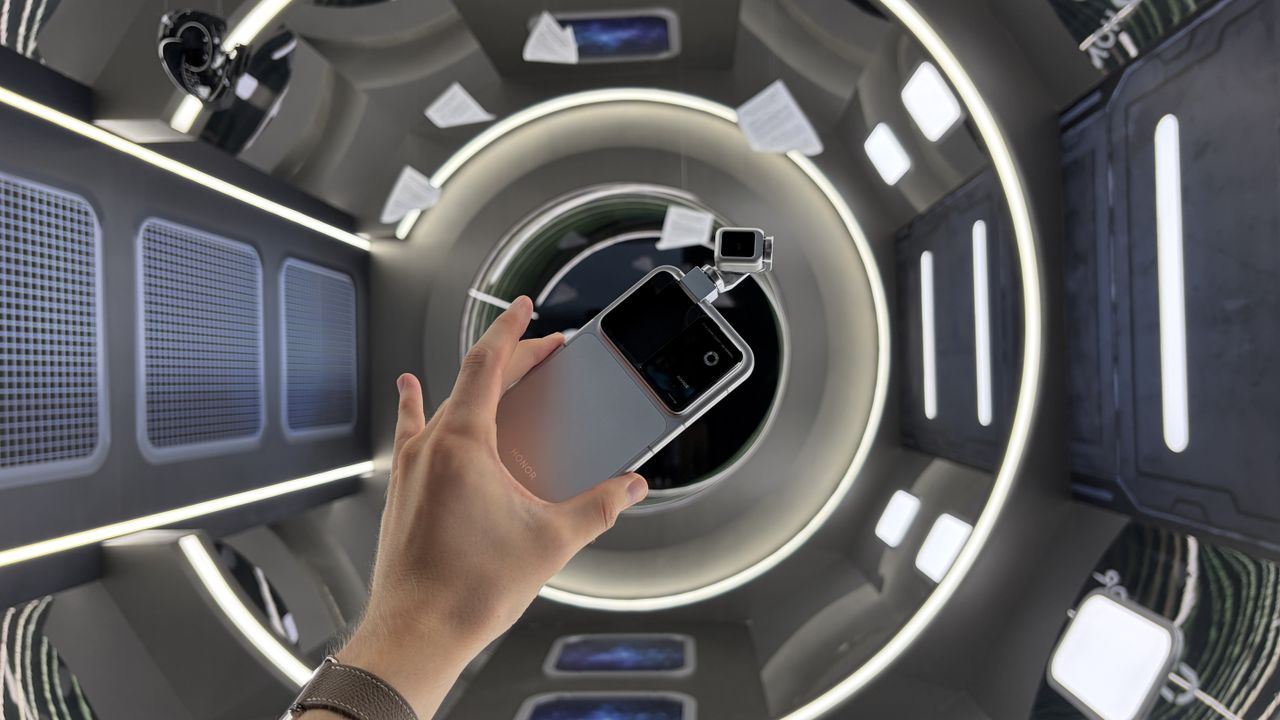
You can imagine my surprise, then, when Honor described the Snapdragon 8 Elite Gen 5 chipset in its new Robot Phone as “not good enough” for pro-grade video capture. Did we just skyrocket through that seemingly impenetrable performance ceiling?
Well, it’s a bit more nuanced than that. As Honor’s President of Hardware Engineering, Yang Liu, explained to me in a group interview at the Robot Phone’s China launch: “The core CPU [in the Robot Phone] is the Snapdragon [8 Elite Gen 5], but Honor has developed a dedicated Image Signal Processor (ISP) — the Honor Imaging Chip H1. The processing [demands] are very high, so we must use a dedicated chipset for that, not just the Qualcomm chipset. The Qualcomm chipset offers very good performance for still image processing, but for video, it’s not good enough — for now.”
All phones have an ISP (or multiple ISPs) built into their main chipsets — indeed, the Snapdragon 8 Elite Gen 5 was the first mobile chipset to feature triple 20-bit ISPs, which, in layman’s terms, means it’s a very capable chipset for photo capture. But the best camera phones — think the Oppo Find X9 Ultra and Vivo X300 Pro — feature custom ISPs alongside those in their respective chipsets to further enhance camera performance.
That’s what Honor has done with Robot Phone, except it’s not framing its new H1 Imaging Chip as a complement to the Snapdragon 8 Elite Gen 5, but as a necessary addition to allow the gimbal-equipped Robot Phone to fulfil its potential as a market-leading video capture device.
Built in partnership with German film camera manufacturer ARRI, the H1 enables real-time on-device image processing — that’s things like white balance adjustment, tone mapping, and exposure control — and supports 10-bit ARRI LogC3 recording and ARRI Wide Gamut 3.
It’s a formidable piece of micro-engineering, and my impression is that ARRI — a 109-year-old company with exceptionally high quality standards — was only willing to partner with a burgeoning Chinese tech company on the Robot Phone because Honor could provide it with the level of processing power necessary to uphold those high standards.
“Pixels are very precious to us,” David Bermbach, ARRI’s Chief Product Officer, told me in the same interview. “[Working on the Robot Phone] was a challenge, but also an opportunity, because mass-produced devices have much more functionality on a smaller scale than special devices for one industry, where we sell a few thousand [units].
“So the task for us was to basically analyse all the different little Lego pieces on the different modules that exist in the phone and [figure out] how to connect them, how to utilize them, to basically rebuild as much of our pipeline as possible. And luckily, the processing power of the Robot Phone is extremely high.
“Also, there’s not just one camera [in the phone],” Bermbach continued, “there are several cameras. And we had to [figure out] how to get the best out of them, how to use the tools at hand, and optimize them towards [producing] a technically good picture, from our perspective, but also an artistically good picture [from a smartphone user’s perspective].”
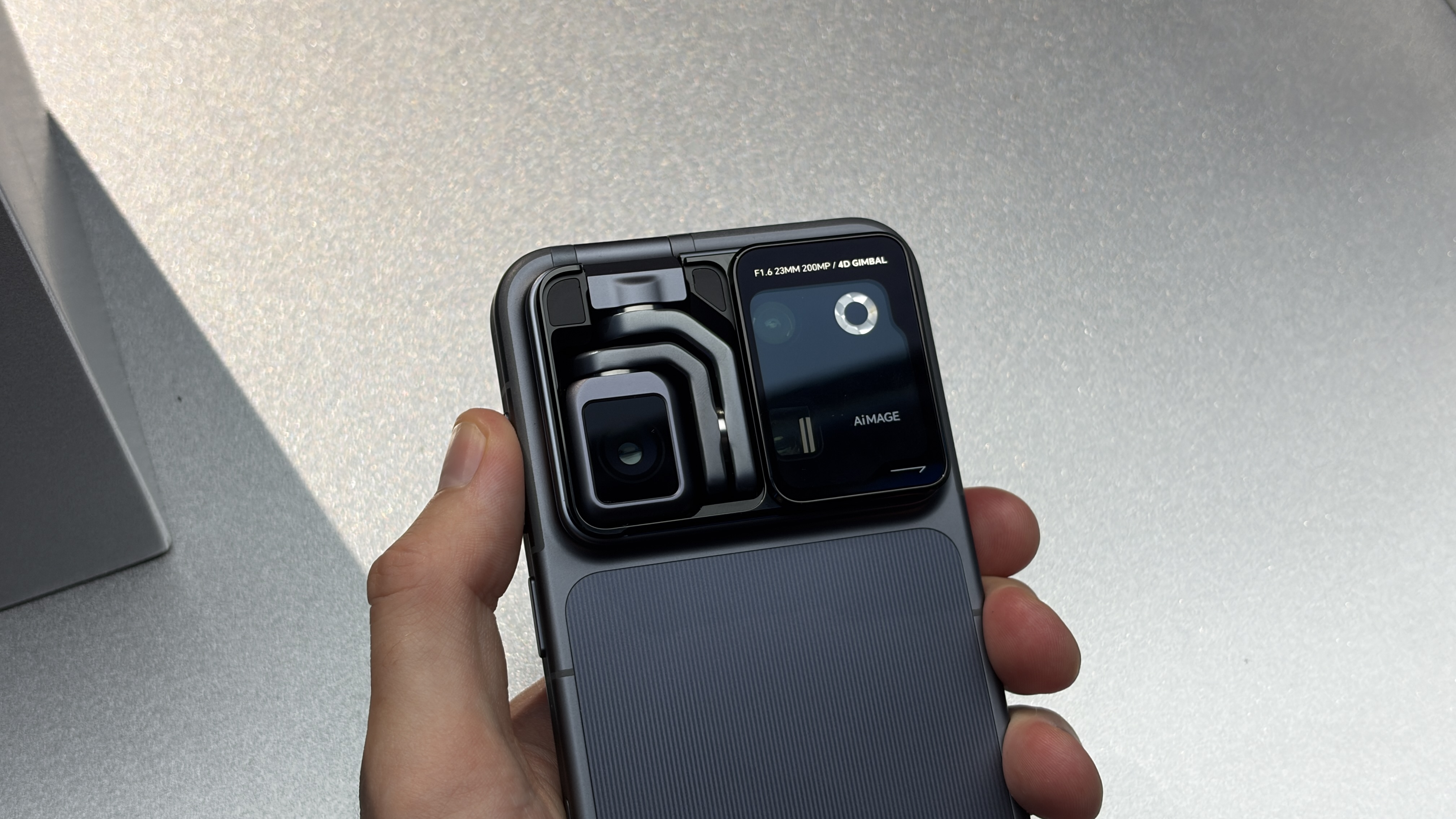
As I wrote in my hands-on impressions of the Robot Phone, its 200MP, 1/1.28-inch gimbal camera produces dynamic, professional-grade footage — or at least footage comparable to what you can achieve with larger, dedicated gimbals like the DJI Osmo Pocket. The key difference here, of course, is that you’re getting the benefits of a gimbal and a phone in a single device, as well as ARRI’s “cinema-standard processing,” as Liu puts it.
Evidently, then, Honor’s H1 Imaging Chip is an impressive innovation, and while the Robot Phone has its problems — it gets noticeably hot after prolonged filming sessions, for instance, and isn’t anywhere near as durable as other flagship phones — I’m excited to see how far creators can push its unique video capabilities.
“This [device] is so revolutionary that we don’t even know all the use cases [yet],” Bermbach told me in our interview — he’s clearly excited too.

